
US Plans Major Cuts to Study Abroad Funding
Apr 9, 2026
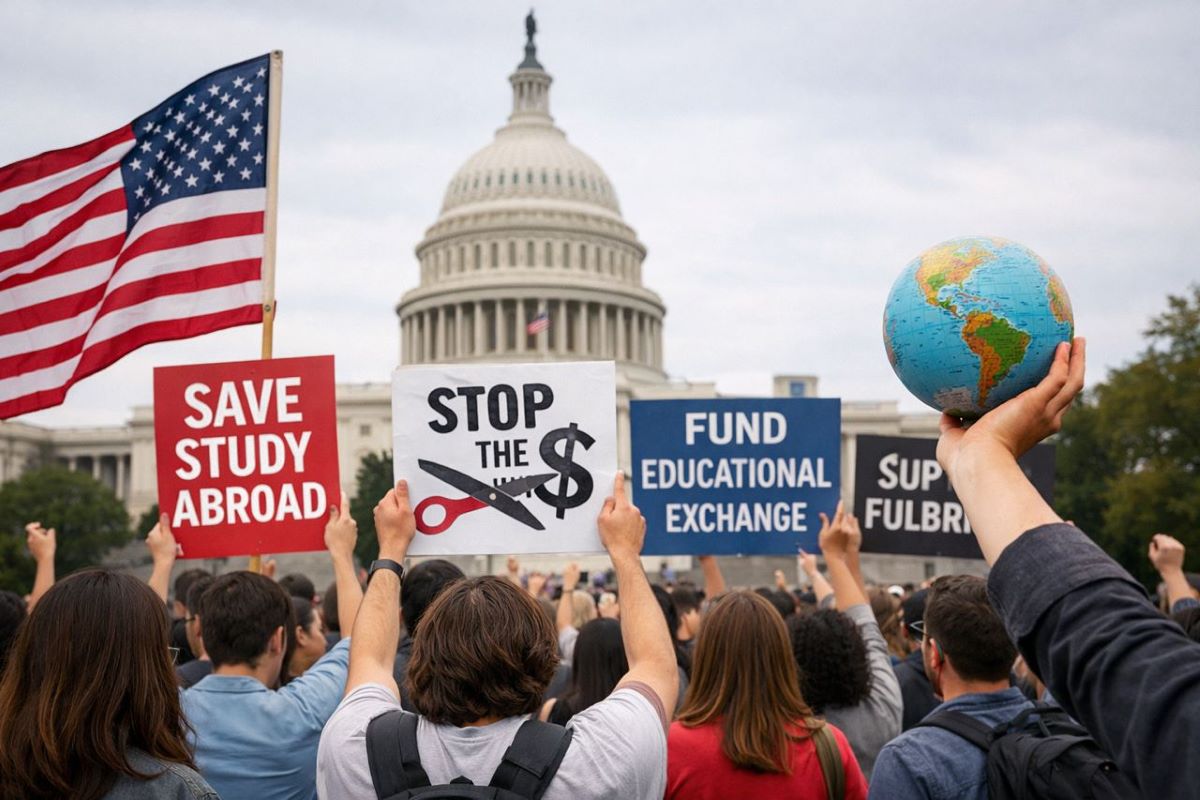
A newly proposed federal budget in the United States is raising serious concerns across the international education sector, as it suggests a dramatic 68% reduction in funding for study abroad and cultural exchange programs.
The proposal, part of the President’s FY2027 budget request submitted by the White House, targets funding allocated through the State Department’s Bureau of Educational and Cultural Affairs (ECA). If approved, the budget would significantly scale back or even eliminate several major exchange initiatives, including the globally recognized Fulbright Program.
However, it is important to note that this proposal is not yet law. The budget must still pass through multiple stages of review and approval in both the House of Representatives and the Senate before any final decisions are made.
Leaders in the study abroad and international exchange community have described the proposal as disappointing but not unexpected. Many are already mobilizing efforts to urge Congress to reject the cuts, warning that such reductions could severely limit opportunities for American students to study, research, and gain global experience.
Mark Overmann, executive director of the Alliance for International Exchange, expressed confidence that Congress will once again intervene, emphasizing that educational exchange programs continue to enjoy strong bipartisan support. He noted that while there is optimism, stakeholders are not taking that support for granted and are preparing advocacy efforts to ensure policymakers understand the impact of the proposed cuts.
If implemented, the proposed budget would reduce ECA funding for study abroad programs to approximately $215 million. Key initiatives at risk include the Gilman Program, the Stevens Initiative, American Overseas Research Centers, and a significant portion of funding for the Fulbright Program, which could see nearly 80% of its budget eliminated. These programs play a critical role in enabling students to study abroad, conduct research, participate in internships, and develop leadership skills on a global stage.
There is precedent for optimism among advocates. In the previous budget cycle, a proposed 93% cut to exchange programs was ultimately reduced to just 5.5% after strong lobbying efforts. That campaign saw more than 21,000 letters sent to Congress, demonstrating widespread public and institutional support. This year, stakeholders are preparing for a similar response, launching new advocacy campaigns to highlight the importance of international education not only for students, but also for national security, diplomacy, and global competitiveness.
Study abroad programs have long been considered a cornerstone of global education, helping students build cross-cultural understanding, professional networks, and critical skills needed in today’s interconnected world. A significant reduction in funding could limit access, particularly for students from underrepresented or low-income backgrounds. As discussions continue in Washington, the future of these programs will depend heavily on congressional decisions in the months ahead.
Source: The PIE News